|
Herding Cats, i.e., Case Management From the Prospective of those Representing the Accused Ingredients of Doing the Job Right when the Government is Wrong
When the government is wrong, it's dangerous to be right, and even more dangerous to be persistently effective in asserting you are right and that the government is wrong.
Millard Farmer Herding Cats Windows Media Player Herding Cats QuickTime Cleveland Ohio 2006
In 1975, I was in a successful small law firm general practice. I left to work with what was to be a statewide public defender system in Georgia. In 1976, we started the Team Defense Project. I am presently in private practice.
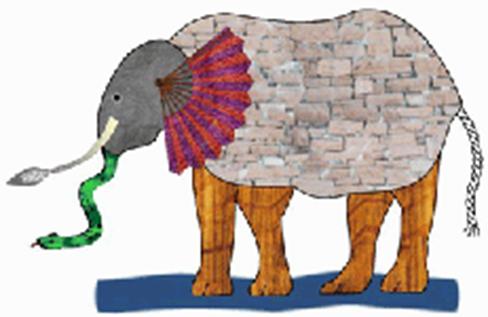
American
poet John Godfrey Saxe (1816-1887) based the following poem on a fable, which
was told in India many years ago.
Talking
about Specifics to Communicate Larger Picture
Although I Will
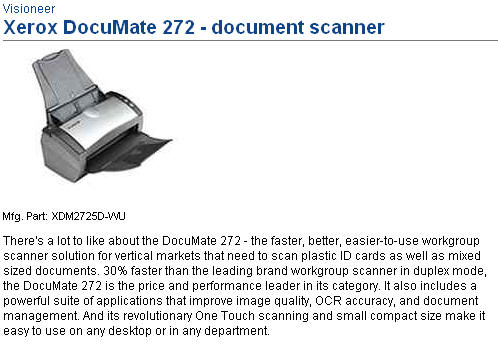
I did not come to Cleveland to tell you how and what computer hardware to buy, although I will.
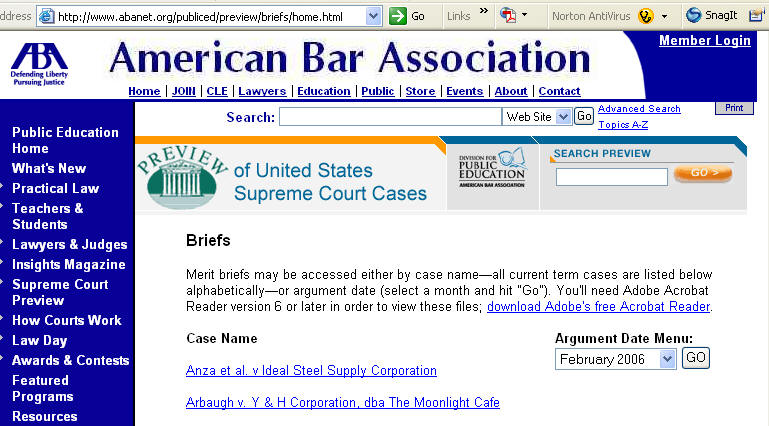
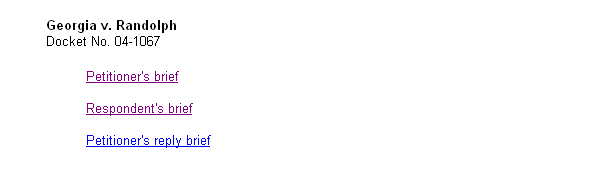
I did not come to Cleveland to tell you how to retrieve the briefs in Georgia v. Randolph, although I will.
I did not come to Cleveland to tell you the importance of creating a Timeline, although I will.
I plan to talk to you about small particular issues to communicate with you about larger issues. For example, not the client comes from a good family, but when I was in the family's home it was clean, the children were respectful, etc.
So in talking with you about these particular matter I am attempting to reflect an attitude and the boundaries of relevant matters.
Understanding the Universe of the “Case” to be Managed
Universe of Representation
Team
Concept
The
Goal of Dispositional Fairness Concept
Moving the
Dispositional Decision to the Earliest Possible Stage
Client Must
be Prepared for Window of Opportunity
Each
of the Triers of Fact
The
Importance of Time
Using Early
Litigation
Utilization
of Time
Importance of Evidence
TIME
Element
of the Time Goals
For Client Relationship
For the Record
To Sell Mitigation
To Emphasize Cost
Individualizing Systemic Issues
Technology
Importance of Personal Involvement
Management Enhancers
Personal Contacts
Oral Communications
Outside Court
In Court
Enhancing
Client Knowledge Base to Include Reality
The
Document Element of Case Management
Dealing with Documents,
i.e., Getting Organized to Free Time for Other Necessities Create
a File and Document Numbering System
―
Example, a60324 Effectively
Using Windows File Folders
―
Contacts Letters Legal Research Timeline
Inserting Hyperlinks and Bookmarks in Documents
Index
to Documents Document Numbering System a60324Motion Paragraph Heading to Summarize Content Paragraph Numbering System See the Index that follows for a numbering system example and Index example
Example of the Summary Type of Index
INDEX Preface 1. Factual Analysis 1.1 Summary of Facts 1.2 The [CLIENT]'s Case 1.3 [CLIENT'S COUNSEL] Began Representing [CLIENT] 1.4 [CLIENT'S COUNSEL] Filed A Motion To Withdraw 1.5 After the Hearing on the Plea Withdrawal, the Court Began A Secreted, Ex Parte Investigation 1.6 [CLIENT'S COUNSEL] Next Appeared Before the Court With [CLIENT], Expecting a a Ruling On His Motion 1.7 [CLIENT'S COUNSEL] Was Held In Contempt 1.8 [CLIENT'S COUNSEL] Had No
His Contempt and Was Not Afforded and the Contempt Finding Was Otherwise Devoid of Protections Afforded by the Local Rules, the State Statutes and both the State and Federal Constitutions 2. The Legal Issues 2.1 Sources of Applicable Legal Standards in General in Contempt Adjudications 2.1.1 Overview of these General Legal Standards 2.1.2 The Local Rule Controlling Contempt Adjudications 2.2 Contempt Adjudication Issues Relevant to this Case 2.2.1 The Indirect, Direct and Summary Contempt Issue 2.2.1.1 Rule of Practice 13.01 2.2.1.2
2.2.1.3 The
2.2.1.4 The Prosecution Should Admit or Deny the Following 2.2.2 The Absence of Notice Issue 2.2.2.1 Rule of Practice 13.00 2.2.2.2
2.2.2.3 The
2.2.2.4 The Prosecution Should Admit or Deny 2.2.3 The Hearing Issue 2.2.3.1 Rule of Practice 13.01 2.2.3.2
2.2.3.3 The
2.2.4 The Issue of a Jury Trial 2.2.4.1 Rule of Practice 2.2.4.2 The
2.2.4.3 The Prosecution Should Admit or Deny. 2.2.5 The Excessive, Unjustified and Unauthorized Punishment Issue 2.2.6 The Selective
Prosecution, Yick Wo v.
2.2.7 A Constitutional, Statutory and Commonsensical Analysis of the Alleged Contemptuous Act. 2.2.8 The Independent Adjudicator and Judicial Misconduct Issue 2.2.8.1 The Ex Parte Hearing Reason for Another Judge 2.2.8.2 The Bias or Prejudice Reason for Another Judge 2.2.8.3 The Rule of Practice 13.01(c)(4) Reason for Another Judge 2.2.9 The Prosecutorial Misconduct Issue 2.3 The Duty and Obligation to Disclosure 2.3.1 The Constitutional Duty to Disclose 2.3.2 Statutory Duty to Disclose 2.3.3 Ethical and Expediency Reasons to Disclose 2.4 The Timely Need for and Use of the Disclosure Materials 2.4.1 Pre-briefing Disclosure Is Necessary 2.4.2 The Disclosure Material Could Be Used For Impeachment 2.4.3 The Required Scope of Disclosure 2.4.3.1 Definitions and Directions 2.4.3.2 The Following Persons Have Information And Therefore Are Covered By This Disclosure Request 2.4.3.3 The Information that is Needed to be Disclosed 2.4.3.3.1 Materiality of Disclosure Demand 2.4.3.3.2 Disclosure Demand Relating to Possible Misconduct 2.4.3.4 The Method to be Used in Obtaining Disclosure from Judge [Circuit Judge] 3. Conclusion Prayer for Relief ATTACHMENTS [Note: All Attachments are omitted from this Example] Attachment 1 [Client's Counsel]`s Motion [filed earlier] Attachment 2 Report of Dr. [________] Attachment 3 Transcript of Guilty Plea Attachment 4 Copy of Sentencing Transcript Attachment 5 The following documents • Notice of Appearance; • Notice of Filing; • Motion to Withdraw Notice of Appeal In Order To Hear[CLIENT]'s Fitness Petition; • Motion to Stay Mittimus Pending Disposition of [CLIENT]'s Fitness Petition; • Affidavit of [CLIENT's mother]; • Motion for Fitness Hearing; • Notice of Motion; • Order Staying the Mittimus; • Notice of Mittimus; • Affidavit of ____________; • Motion to Attach Affidavit of __________ to Motion to Withdraw Guilty Plea; • Memorandum of ____________; • Affidavit of ____________; • Notice of Motion; • Motion to Withdraw Plea of Guilty; and, • Certificate of ___________.
Preface Headlines Short Paragraphs Use
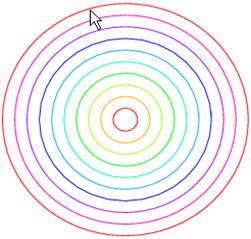
Concentric Circle Concept
Include Dragnet Treatment
Including Photos SnagIt 8
Writing the Strategic Subpoena
Without presenting evidence, there can be no Action MotionsY2K9. The strategic subpoena is one of the ignition systems necessary for Action Motions Y2K9. Catchy titles for motions, innovative subject matter for motions and even favorable publicity cannot assure the proper ignition for Action Motions Y2K9. The strategic subpoena begins to tell the story and accomplish the goals. An important element of the strategic subpoena is the production of documents portion of the subpoena. An example of a request for documents is the following request used in a post-conviction hearing. ITEMIZED ITEMS SUBPOENAED
1. All documents relating to the televised CNN Presents segment, “Amazing Grace.” This segment was recorded, in part, in the residence of xxxx on or about February 28, 1994 and was first broadcast on April 9, 1995. 2. All documents relating to Court TV's involvement in the trial of xxxx. These include interviews and segments in which you appeared or were depicted between April 7, 1993 and the present. 3. All documents relating to the WSB-TV newscast which showed you strutting (walking in an animated manner with exaggerated movements of upper and lower extremities) down the hall of the Fulton County Courthouse very soon after the verdict in the trial of xxxx. 4. All documents relating to other TV broadcasts, between April 7, 1993 and the present, in which you appeared or were depicted. 5. All documents in which you appeared and/or were recorded and/or were depicted or described relating to or appearing in radio broadcasts and/or audio recordings, between April 7, 1993 and the present. 6. All documents in which you appeared or were depicted relating to or appearing in newsprint or other print media, between April 7, 1993 and the present. 7. All documents relating to legal seminars or oral presentations, between April 7, 1993 and the present, in which you participated or presented information. 8. All documents concerning any communications between you and xx or concerning xx, including, but not limited to, any interactions between you and xx between April 7, 1993 and the present. 9. All documents concerning any communications between you and xx or concerning xx, including, but not limited to, any interactions between you and xx between April 7, 1993 and the present. 10. All documents concerning any communications between you and xx or concerning xx, including, but not limited to, any interactions between you and xx between April 7, 1993 and the present. 11. All documents concerning personal funds supplied by you to assist in the investigation and/or prosecution of xxxx. 12. All documents concerning funds and/or services provided by other than governmental entities for the prosecution and/or investigation of xxxx or any facts relating to the fire at the residence of xxxx. 13. All documents received by you from the Georgia Bureau of Investigation or other law enforcement agencies relating to the case of State of Georgia v. xxxx. 14. All documents concerning information relating to the date of any test for accelerants in the residence of xxxx and the date of receipt by the office of the District Attorney of Fulton County of the report for any tests relating to these accelerants. 15. All documents concerning any compensation, reward or benefit which was provided any persons testifying at the trial of xxxx. 16.
All documents concerning any compensation, reward or benefit provided to any
person related to the case of State of
18. All documents concerning other cases on which you worked between the night of April 7, 1993 and the day of closing arguments in the case of State of Georgia v. xxxx. 19. Copy of your W-2, W-4 and 1099 forms and federal income tax returns for the past four years. 20. All documents reflecting gifts, contributions, or donations, rewards or awards you have received from April 7, 1993 until the present excepting only gifts from persons related to you by blood or marriage within the 7th Levitical degree. 21. All documents reflecting gifts, contributions, or donations, rewards or awards you have made from April 7, 1993 until the present excepting only gifts given to persons related to you by blood or marriage within the 7th Levitical degree. 22. All documents reflecting terms of compensation to you by any entities other than the office of the District Attorney of Fulton County from April 7, 1993 to the present. 23. All documents relating to any complaints about your conduct as an attorney or about your conduct as a prosecutor in any case during the time you have been employed by the office of the District Attorney of Fulton County. 24. All documents relating to any application you have made seeking any judicial position during the time you have been employed by the office of the District Attorney of Fulton County. 25. All documents relating to any application you have made seeking employment within the last five years, including, but not limited to, employment at Georgia State University. 26. All documents related to classes you have taught or are currently teaching at Georgia State University. This includes, but is not limited to, lesson plans, course materials, and lecture documents. 27. All documents you have written about the case of xxxx that are not a part of the official record of this case. 28. All documents related to written or oral communication with persons who testified during the trial of the case of State of Georgia v. xxxx from April 7, 1993 to the present. 29. All documents related to written or oral communication with persons about xxxx since April 7, 1993 to the present. 30. All documents that relate to any justification for you questioning Dr. Joseph Burton about being called “Lying Joe Burton.” 31. All documents relating to any persons entering the residence of xxxx from April 7, 1993 to the present. 32. All documents depicting any view of the scene of the residence of xxxx from April 7, 1993 to the present. 33. All documents depicting any view or reflecting any test, test results, experiment or simulation that in any way relate to the case of the State of Georgia v. xxxx or the fire at the residence of xxxx, including, but not limited to, the video made during the presence of the CNN crew at the residence of xxxxand the test by xx made before the trial of xxxx of the Neat-Lac burning against a board. The strategic subpoena is most often accompanied with the following attachment that demonstrates to the court the courtesy you are extending to the witness. The following is an example of this type of attachment. ATTACHMENT 1 to Subpoena
NOTE: Counsel for xxxx are coordinating the subpoenas and documents subpoenaed for the hearing in this case scheduled to begin Thursday, April 11 at 9:00 a.m. through the office of Millard Farmer, P.O. Box 1728, Atlanta, GA 30301, telephone (404) 688-8116; fax: (404) 577-0643. Someone at this office will be available to discuss your attendance and your production of documents pursuant to this subpoena. Please inform the person answering the phone that you wish to talk with someone about your subpoena for this case. There will be someone available from 9:00 a.m. to 5:00 p.m., Monday through Friday. Persons who are subpoenaed are requested to call as soon as possible with scheduling or document production problems. The purpose of these calls is to arrange for a schedule, not only for attendance, but also a time to produce the subpoenaed documents. The same documents, in some instances, have been subpoenaed from more than one witness. It is not intended that each witness be burdened with production of the documents or items subpoenaed if there can be an agreement as to the person who will supply the document or item subpoenaed. Persons who wish to be on call for attendance may make this request and everything possible will be done to accommodate both personal and professional obligations and schedules. Please note the time and date on your subpoena; not everyone is subpoenaed for the same time and date. Please call as soon as practical or have your counsel call promptly so that this hearing can be facilitated without a number of people being inconvenienced by last day and hour requests for accommodations. It will be difficult to adjust the scheduled time for your appearance close to the hearing date. Please call promptly for the convenience of all involved; however, please understand this requested call is not required by the court. The strategic subpoena is accompanied by a list of descriptions much the same as descriptions used in notices to produce documents in civil cases. An example of this attachment of descriptions is as follows. ATTACHMENT 2 To Subpoena
DEFINITIONS RELATING TO SUBPOENAED ITEMS The following definitions are an integral part of these requests for documents and are applicable throughout this request.
"Document", either singular or plural, is defined as any and all originals, or if not available, true copies of all memorandum, reports, appraisals, evaluations, correspondence, receipts, payment vouchers, accounting records and books, communications, interoffice communications, intra-office memorandum, inter-agency communications, electronic recordings including computer generated and/or preserved recordings, video recordings, audio recordings, summaries of conversations, summaries of memorandum of meetings or conferences, list of persons attending meetings or conferences, diaries, records or summaries of interviews, investigation or reports, summaries of negotiations, agreements, contracts, agency rules, agency policies, office manuals, invoices, canceled checks, journals, ledgers, file cards, index cards, indices, deposit slips, data processing cards, computer or business machine printouts, electronic recordings, work papers, statements, financial statements whether audited or unaudited, leases, speeches, information provided to the media, press releases, advertisements, pamphlets, circulars, professional letters, annual and other reports, documents filed with government agencies, reports of experts and research personnel, draft and preliminary copies of any of the foregoing, marginal comments appearing in any document and all other writings and data compilations, including any written, printed, recorded or graphic matter, photographic matter or similar reproductions, however produced or reproduced or tangible things upon which words or phrases are affixed.
The effective use of subpoenas in litigation is a little used skill. The requirement to bring documents aspect of the subpoena should be written much as the concentric statements concept in Action Motions Y2K9.
In fact, the subpoena should be a modified motion. It
should command the person being subpoenaed to bring numerous items with him/her
to the Action Motions Y2K9 hearing to be used as Energized Evidence. Sources Electronic Access to
Court Records (Trend) PACER
(Federal Courts)
LexisNexis CourtLink Lexis One (Free, All Jurisdictions, for last 5 years) Ninth Circuit Capital Punishment Handbook Helpful Web Services
MyDocsOnline This is a web based document sharing
system
Reasonably Priced Internet Hosts are Available VoIP Helpful Newsletters about Computer Issues Subscribe to the
Langa List
newsletter (free)
WOODY's
OFFICE WATCH (free, also consider his other free letters)
Karen's (Free tools plus newsletter by
best computer writer) Computer Equipment How to purchase equipment at the best price Scanners
OCR Software
Video Presentations
It is necessary to edit videos
ACTION MOTIONS PLUS Y2K9
The Introduction
Motions,
too frequently, are treated as a mere procedural routine. For a skilled
advocate, motions represent an invaluable opportunity to expose and challenge
many factors, both legal and extralegal, while pursuing the goals of the chosen
model of representation. Action Motions Y2K9
are intertwined with an underlying strategy of representation, a strategy
constructed by combining, in various degrees, persuasion, legalistic reasoning,
influence and conflictineering. We identified four basic skills of advocates
with descriptions of these skills in the Models of Representation section. http://www.goextranet.net/Seminars/Models/OverviewAll.htm
We
summarize these skills here with the icons we associated with each of these
skills.
In
practice, each of these three systems is most frequently combined with another
of the systems. Once the representation ends, it is difficult to determine,
which of the system was most responsible for results.
Visit the
material on the Internet for a detail explanation of the following indexed
sections.
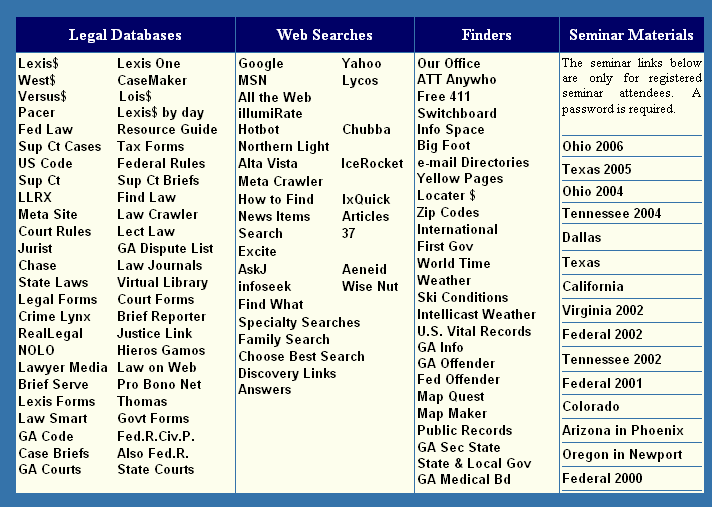
To enter the website go to the following site.
http://www.millardfarmer.com
After reaching either of the above websites, go to
the right column of the first row of the website and locate
Seminar
Materials, then proceed as follows.
(Under the top right column heading)
Seminar
Materials
(Click on)
Ohio 2006
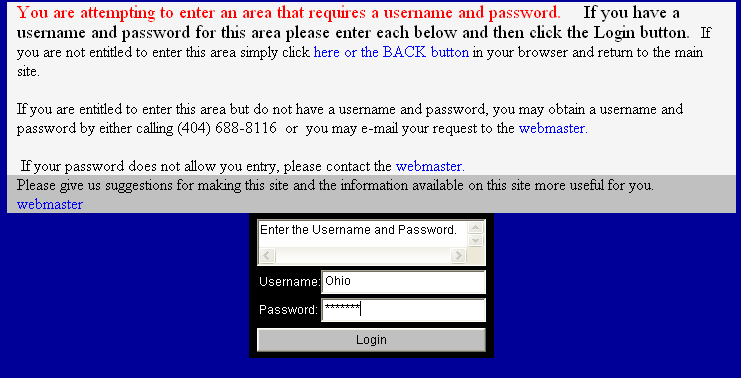
After clicking on
Ohio 2006, you should reach the page asking for your Username and Password. Use
the following username and password.
Username
Ohio
Password
Seminar
If you cannot negotiate the Login screen, it
is probably because you do not have java scripts enabled on your computer. As a
workaround, you can either install download java at
http://www.java.com/en/download/windows_automatic.jsp or you
can insert the following URL and enter
the website.
http://www.goextranet.net/Seminars/Ohio06/AgendaAll.html
If you encounter additional troubles, feel
free to call 404 688-8116 or e-mail
The Black Hole of Litigation, the Death Penalty
The Black
Hole of Litigation
Getting
Out and Staying Out In
litigation where the accused person is eligible for the death penalty and the
government’s desire for death as punishment is not derailed, the litigants at
some phase of the litigation will enter into the Black Hole of Litigation.
Not
so different in effect from the term “black hole”, which is use by the
scientific and sci-fi community, the Black Hole of Litigation
is
best identified as the point in time when the gravitational pull of human
decency, rationality, appropriate criminal justice goals and constitutionally
mandated protections succumb to mob mentality, motivated by such
indistinguishable factors as political opportunism, vengeance, machismo,
insecurity and irrationality.
The
motivations and causes of the gravitational pull of the Black Hole of
Litigation, while easily identifiable in retrospect, are
difficult for even some seasoned litigators to foresee, as the motivations are
deceptively associated with conduct justified by such clichés as “only following
the law”, “doing my duty”, “adhering to my oath of office”, “fulfilling my duty
to the people who elected me”, “protecting the people of this community”,
“crime deterrence”, “victim impact evidence” and “state’s right to a fair
trial” that litigants are well within the Black Hole of Litigation
before they determine the accurate reasons that their compass of good judgment
is no longer effective in making sound litigation decisions about the
predictability of the government actors involved in the killing process.
Recognizing
the motivations for the gravitational pull that bring a litigant and the
litigant’s support team into the Black Hole of Litigation is
relevant in developing ways of getting out and staying out of the Black
Hole of Litigation. While recognizing motivations are relevant, this
skill alone adds little to either the prevention or recovery process.
With
our present understanding of human behavior, these ill-formed motivations of
persons who become governmental actors as their way to survive in life cannot
be changed. While unchangeable, there is much that can be done to minimize the
consequences of these actions and even more to minimize the compensation these
governmental actors receive for their conduct. Is the Black Hole of
Litigation just another Cliché to be used by Frustrated Death Penalty
Defense Advocates or is it a Definable, Sui Juris Phenomenon with which
we must deal?
For
over a quarter of a century we have heard such clichés as the “Death Penalty is
a part of the Political Process.” While relevant, the recognition of this fact
is only one of the numerous relevant ingredients to understanding the decision
making process of governmental actors.
It
did not take a social scientist to proclaim that the South is “the buckle of
the death belt.” This statement also speaks to a relevant consideration.
Primarily, it speaks to the geographical differences in the number of
executions, which account for the fact that in some areas the tasks of
advocates is much different and more difficult. Here again, geographic
differences in attitudes only offer another ingredient, but not a complete
explanation for the motivations of governmental actors.
To
these catch phrase explanations identifying predictable difficulties in death
penalty cases, we must now add the Black Hole of Litigation, a
more comprehensive and all-encompassing articulation of problems, which face
advocates attempting to assist in death penalty litigation The Statutory and
Constitutional Scheme for Determining who is Death Eligible is a Graveyard Joke
upon Society that Aids in the Creation of the Black Hole of Litigation
Guised
as constitutional protections, often acting in concert to appease popular
opinion, as recorded in public opinion polls, legislative bodies and courts
have devised punishment infliction schemes that require the government to prove
a “limited” number of aggravating circumstances. As this graveyard joke upon
society progresses, the accused is allowed to present any and all mitigating
circumstances to triers of fact who are skewed to accept death as punishment as
an acceptable societal requirement. While these statutory schemes have
presented interesting and defining litigation, they have done little to curtail
the government’s application of a false solution to real problems.
In
addition to an elaborate, but meaningless process to access the punishment of
death and various requirements for counsel representing persons in death
penalty trials, the reality is that most individuals are underrepresented in
death penalty cases. In spite of the occasional bone tossed to death penalty
litigants, we are left with a death penalty defense system comprised of
advocates, who, for the most part, are incapable of getting and staying out of
the Black Hole of Litigation.
Realistically
stated, in the early stages of litigation, where there is the greatest
opportunity for relief, we have the least skilled, least prepared and least
knowledgeable advocates. It is too simplistic to assert that these early stage
advocates only need better training and more funding.
The
task of representing persons before conviction and sentencing inflicted upon
these advocates is too daunting. Admittedly, better training, more funding,
better job security that would minimize obvious conflicts of interest, and more
funding will help initial death penalty defense advocates, but
each of these qualifiers speaks to the problem rather than a
course of action that will provide a workable solution.
A Part of Our Problem that Lands us in the
Black Hole of Litigation and Prevents our Return is that we Play the Game
of the Government Actors
The Government, in reality, Selects, or,
better stated, Deselects the Advocates for People whom it wishes to Kill for
Punishment
Offer of Proof
Remember, it was those who stayed out of the ring in the coliseum that were not eaten by the lions in ancient Rome. Taking the Power Using the Web, as a Defense Tool
Herding Cats
In a sense,
this is what we do.
|